Free webinar · Mon 7 Dec 2026 · 16:00 CET
Oak Ridge National Laboratory on the AFSHow they run overnight jobs
Join Oak Ridge National Laboratory for a 60-minute deep dive into automated 3D print farming with the Prusa Pro AFS. Discover how ORNL managed continuous, mixed-batch production across three drone sizes, and learn proven best practices for automated and manual print harvesting.
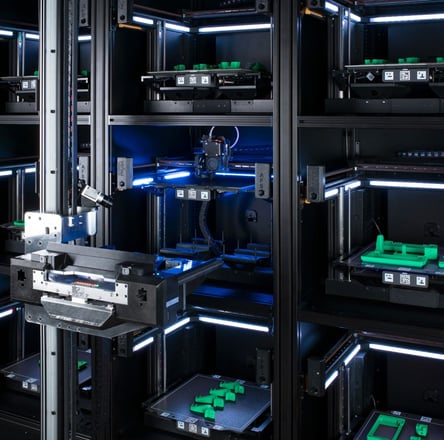
Mon 7 Dec 2026 · 16:00 CET · 10:00 a.m. ET
Live on Zoom, recording available afterwards.
Where print farms lose hours
When a job finishes overnight, the printer sits idle until the morning shift manually clears the plate. Such delays cap throughput and leave farm capacity underutilized. The Prusa Pro AFS automates plate clearing across nine printers, keeping production running 24/7.
Idle overnight
When a print finishes at night, it sits idle for hours until the morning shift arrives to harvest the print.
More printers, more clearing
Every extra printer adds plate changes and restarts. Staffing scales with the farm, not just with demand.
Manual plate handling
Manually swapping print sheets is repetitive and costly in 24/7 operation. The AFS automates this exact step to keep production moving.

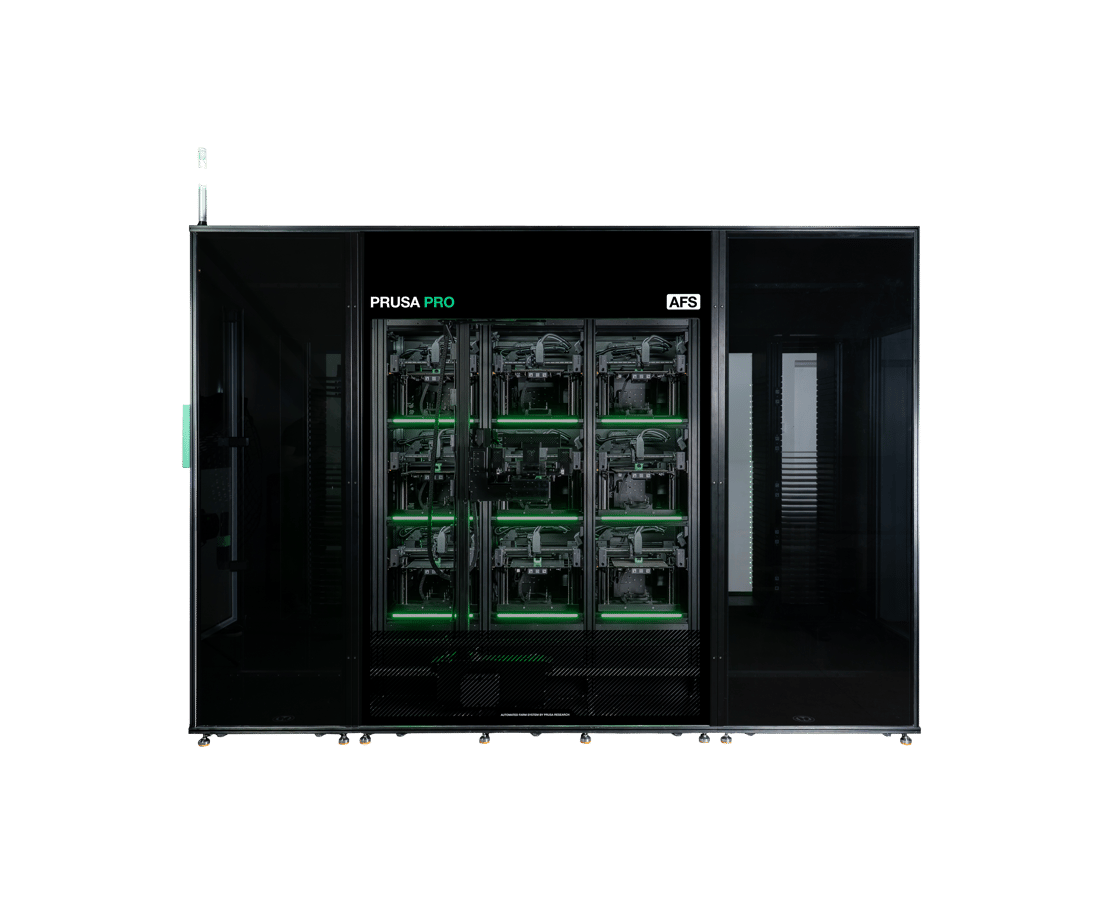
Prusa Pro AFS · full cell
Nine printers. One harvester.
An AFS cell integrates nine printers, a robotic harvester, sheet storage, and Prusa Connect Farm management software. Prusa Connect manages jobs, and the harvester automatically replaces finished print sheets with fresh ones - enabling lights-out, continuous manufacturing without manual intervention.
How an AFS cell runs a job
From the queue to a finished part, without clearing every printer by hand.
Prusa Connect Farm schedules each job and sends it to an available printer, for example one that just finished and is still warm.
CoreXY printers with auto bed levelling and filament sensors run the same part or different parts at once.
When a print finishes, the harvester removes the print sheet, drops parts into storage and loads a fresh sheet.
The printer goes back to the queue. A printer that needs service can be swapped without stopping the other eight.
What the AFS changes on the floor
Nights become print time
Plates swap automatically and new jobs start immediately, keeping your print farm running continuously through every off-shift.
Less handling per part
Operators focus on managing queues and collecting finished parts in batches, eliminating manual intervention at individual machines.
Mixed jobs, no moulds
Different small-batch parts print side by side, spares, fixtures, custom items, without tooling changes.
Scale in steps of nine
Add another nine-printer cell when demand grows. Prusa Connect Farm automatically adapts.
Service without stopping the cell
Individual printers can be swapped out for service or maintenance while the remaining eight keep printing uninterrupted.
Job history in Connect
See what printed, on which printer and when, including remote access.

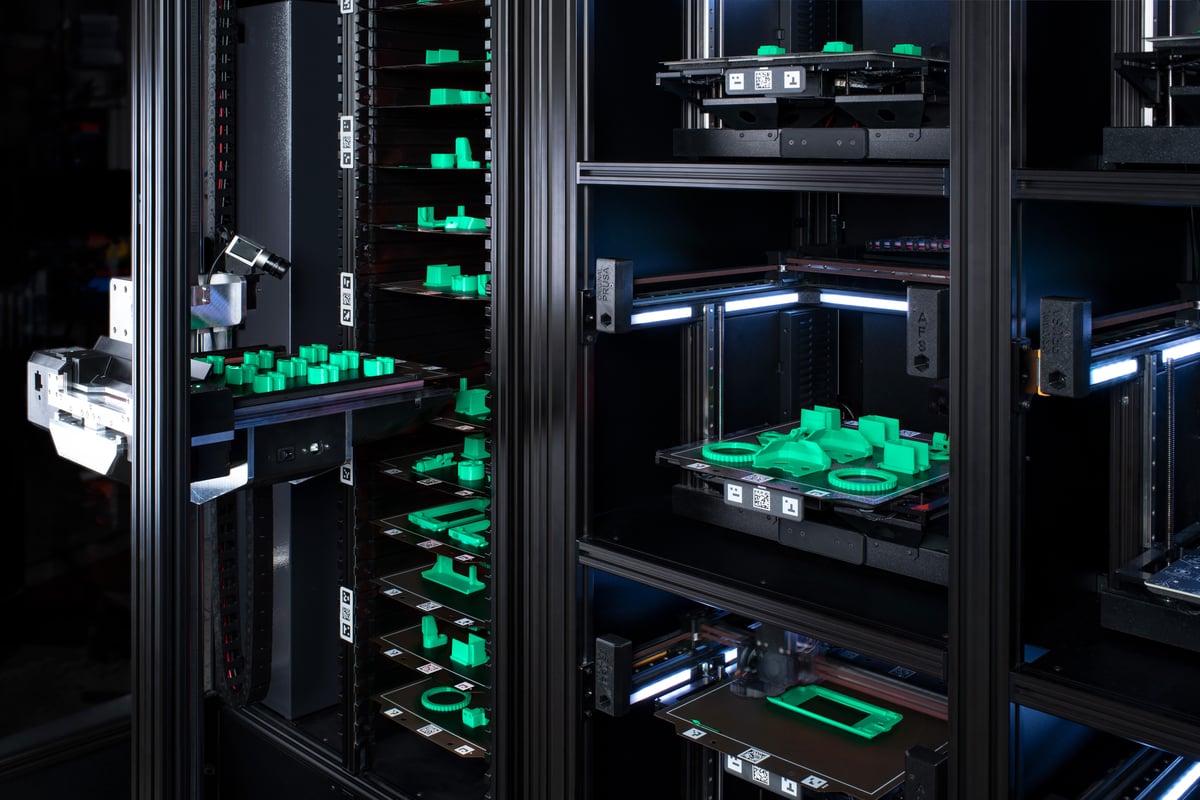
Mixed overnight jobs inside an AFS cell
Oak Ridge National Laboratory: drone parts on the AFS
Why ORNL
Oak Ridge National Laboratory (ORNL) is a U.S. Department of Energy lab. Its Manufacturing Demonstration Facility helps companies adopt additive manufacturing.
In this session Alex Roschli covers how ORNL used the AFS to print components for three drone sizes for an integrated manufacturing demo at IMTS, mixed jobs, overnight runs, and what they learned running such an operation.
“We chose the Prusa AFS because it combined automated production with the flexibility to print components for three different drone sizes, making it an ideal fit for our integrated manufacturing demonstration at IMTS.”

Webinar agenda · 60 minutes
Introduction and basic overview
Harvester, sheet storage, Prusa Connect Farm - and what Prusa learned from runningits own farm.
What Oak Ridge NL printed for three drone sizes, why they chose the AFS, how they run day to day.
Output, people, floor space, what goes wrong, and cost.
Farm assessment and more
Questions to Prusa and ORNL, including those sent with registration. All speakers
Speakers
Martin Doležel
B2B Sales Manager · AFS expert, Prusa Research


Alex Roschli
R&D Staff, Oak Ridge National Laboratory


Emir Hamzic
Head of B2B Sales · Host, Prusa Research


Who should attend
Production and operations
Teams running or planning a multi-printer farm.
Small‑batch and spare‑parts producers
Mixed jobs that do not justify moulds or long setups.
Service bureaus
More overnight output without adding night shifts.
R&D and demo labs
Steady job queues and demos that need unattended runs.
Prusa Pro Webinar Series
Two free live deep dives. Sign up for one or both.